
The government has mandated that from October 2017, all new car models will have to be equipped with airbags to meet crash test norms.

The GST Council last year imposed a cess of 15 per cent on hybrid vehicles, in addition to the 28 per cent GST, leading to a total tax burden of 43 per cent against a previous tax rate of 28 per cent.

In the two-wheeler segment, Bajaj Auto reported 31 per cent jump in total sales at 357,883 units in February against 273,513 units in the same month last year.

In a rare face off, captains of the auto industry have hit out at the government for not walking the talk. At an industry event in the capital on Wednesday, R C Bhargava, chairman of India's largest carmaker Maruti Suzuki, and Venu Srinivasan, chairman of TVS Motor, questioned the government's intent to support the auto sector. Revenue secretary Tarun Bajaj sat in the audience listening, before his turn came to counter them.

Maruti's exports in May were down 2.4% at 9,089 units

A clutch of automakers including Maruti Suzuki, Hero MotoCorp, Mercedes Benz India, Eicher Motors, TVS Motor, and Isuzu Motors India announced they had got the clearance from the governments of the states they operate in to resume operations.

Cumulative sale at India's top six passenger vehicle (PV) makers dropped 0.7 per cent to 267,000 units, from 269,000 a year before.

Honda Cars India is recalling a total of 1,338 units of its premium sedan Accord and sports utility vehicle CR-V manufactured between 2002 and 2003 to replace a faulty part in the passenger side airbags. The recall, which is part of Honda's global recall regarding the potential defect related to passenger air bag announced in June 2014, would cover 1,085 units of Accord and 253 units of CR-V.

Maruti, Hyundai, Tata Motors, Mahindra & Mahindra and Honda saw their passenger vehicle sales improve in August compared to the same month last year, although Ford and Toyota witnessed a decline.

The auto industry has had a mixed month. The build up to Dhanteras and Diwali was good but the demand tapered off subsequently.

Cars and two-wheelers attract 28% GST and a cess in the range of 3-22%, taking the effective tax rate to up to 50%.

Auto major Mahindra & Mahindra on Friday said it will hike the prices of its passenger cars and commercial vehicles by Rs 6,000 to Rs 20,000 from October 1, partly to offset higher input costs and depreciation of rupee against the dollar.

Hyundai Motor India Ltd (HMIL) on Thursday said it will hike prices by up to Rs 20,000 across models, except the newly launched compact car Grand i10, from October 1 to offset the impact of rupee depreciation and rising input costs.

The entire range of Hyundai's diesel cars - from compact ones to SUV models, including the soon-to-be-launched Aura - will be eco-friendly.

Maruti has announced it will phase out diesel variants from April 1, 2020, when stringent BS VI norms take effect

The country's largest carmaker Maruti Suzuki India (MSI) on Monday reported a 11.8 per cent increase in wholesales to 164,469 units in February. The company had sold 147,110 units in February last year, Maruti Suzuki India (MSI) said in a statement. Domestic sales increased 11.8 per cent to 1,52,983 units last month, as against 1,36,849 units in February 2020, it added.

Since existing laws do not cover Covid-19, any compensation in this regard has to be left to the discretion of companies.

High-end mid-sized sedans, comfy SUVs and entry-level luxury models steal their show.

While home-grown firms like Tata and Mahindra have been actively participating in the government's e-mobility mission, by launching electrified versions of their existing models, the global firms believe electric is not the best solution for a country where the primary source of power generation is coal, and where infrastructure is a big impediment.

After the easing of lockdown in mid-May, auto companies were able to resume production in a phased manner, but the ramp-up was slow due to a broken supply chain, and lockdown-induced restrictions.

Most technology companies such as Infosys and Wipro, multinationals such as Amazon and IBM, and start-ups such as Flipkart have made the city their home thanks to its salubrious climate, cosmopolitan culture, and the ability to get talent locally

A weaker rupee against the US dollar and the Japanese yen along with margin sustenance pressures have forced companies to raise prices.
.jpg)
Condusive climate across states is crucial for manufacturing growth.

Maruti's sales of the compact segment comprising Swift, Estilo, Ritz, Dzire and Baleno went up by 9.9% to 45,579 units

Maruti Suzuki, Hyundai, Mahindra and Toyota reported low single-digit sales growth for the month owing to weak market sentiment

'The promises of netas and babus and new laws, however well-meaning, mean little.' 'What matters is implementation on the ground.' 'Every law is finally implemented by a vast army of offici

Almost 40 per cent of a durable company's sales are achieved during the festival season

The industry needs stimuli to help revive consumer demand and conversions.

Maruti Suzuki, Tata Motors and Hyundai stand to gain the maximum, given their large portfolio of products in the sub-4 meter segment.
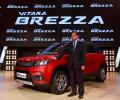
Maruti Suzuki and Hyundai would make the largest gain.

Apart from a pavilion of vintage cars, there will be a Bollywood corner

Automobile makers in India are embracing taxi-hailing apps such as Uber and Ola, hoping to ride on their expansion to sell more cars, a contrarian view to companies in Western markets that fear a drop in car sales due to them

While hybrids, CNG and biofuels found favour in 2018 among many carmakers including Maruti Suzuki, Mercedes-Benz, Toyota and Honda, others such as M&M and Tata Motors have shown full faith in electric vehicles.

Auto, tourism exceptions but major sectors otherwise saw decline in FY13 inflows.
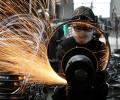
As Covid-19 cases surge in India, companies have realised it's a tightrope walk between maintaining production and ensuring employee safety.

The models from Hyundai and Maruti, which might go on sale in October 2018 and February 2019, respectively, are set to revive a segment that had lost sheen to the compact SUV segment, lately

During September, Maruti said it dispatched 1,375 units of the soon-to-be-launched sedan Ciaz.

Car sales dipped by 2.55 per cent in October, as the festival season demand for auto remained in slow lane.

The biggest worry is not the shrinking of the labour market, but the collapse of good jobs.

Falling margins, high inflation pitting workers against management.
 © 2026 Rediff.com - Advertise with us - Disclaimer - Privacy Policy - Sitemap - Feedback - About us - Terms of use - Grievances